Showing posts with label charms. Show all posts

June 10, 2024

Dragon Boat Festival

The Dragon Boat Festival is an ancient Chinese celebration that always falls on the fifth day of the fifth lunar month of the Chinese calendar - that's five days after the new Dragon moon of May or June. It’s the third largest festival in the Chinese calendar, and it’s considered to be the start of summer. 

On this day everyone watches the spectacular dragon boat races, with the paddlers moving their oars in one fluid motion while the drummer thumps out a rhythm. The races might have begun as a symbolic way to encourage the dragons to fight in heaven and bring rain, so farmers would have good crops. Today, the races are held everywhere from Rome to Seattle, and if you are near enough to see them - how wonderful!

The Chinese call this the Duan Wu Jie (pronounced Dwan woo-oo Jee-eh) or Highest Meridian Festival. A meridian is a high point, as in the sun at the solstice. The Chinese celebrate the solstice today, according to a lunar calendar, so it varies every year. Traditionally this day is dangerous and unhealthy because it’s so strongly yang, putting the forces of ying and yang out of balance.

2018 xiangbao sachets
Agenda:
1. A Chinese chant
2. Make a xiangbao sachet
3. Make zongzi (dumplings)
4. Throw zongzi in the water

June 22, 2023

Dragonboat Festival

The Dragon Boat Festival is an ancient Chinese celebration that always falls on the fifth day of the fifth lunar month of the Chinese calendar - that's five days after the new Dragon moon of May or June. It’s the third largest festival in the Chinese calendar, and it’s considered to be the start of summer. 
On this day everyone watches the spectacular dragon boat races, with the paddlers moving their oars in one fluid motion while the drummer thumps out a rhythm. The races might have begun as a symbolic way to encourage the dragons to fight in heaven and bring rain, so farmers would have good crops. Today, the races are held everywhere from Rome to Seattle, and if you are near enough to see them - how wonderful!

The Chinese call this the Duan Wu Jie (pronounced Dwan woo-oo Jee-eh) or Highest Meridian Festival. A meridian is a high point, as in the sun at the solstice. The Chinese celebrate the solstice today, according to a lunar calendar, so it varies every year. Traditionally this day is dangerous and unhealthy because it’s so strongly yang, putting the forces of ying and yang out of balance.

2018 xiangbao sachets
Agenda:
1. A Chinese chant
2. Make a xiangbao sachet
3. Make zongzi (dumplings)
4. Throw zongzi in the water

June 21, 2023

Summer Solstice

The season is turning. Today the sun exerts its maximum energy on our part of the earth; the powers of outward expression are at their greatest, and the powers of inner contemplation are at their lowest.
And of course, just as we reach the point of maximum yang energy, yin energy is reborn and begins to gain strength: The next days will each be a little shorter again, until the winter solstice in December.


Agenda:
1. Plan a fun first week of summer
2. Make a New Solar Disk

3. Harvest herbs
4. Make Kanelbuller (Swedish Cinnamon buns)
5. Make flower crowns
6. Build a Solstice Fire

December 27, 2022

3rd Day of Christmas

This is the third day of the twelve-day festal tide - a sacred, festive season. 
It gets harder on the third day to maintain a Sabbath mentality, and today we will returned to our regular grandchild-care duties, so my retreat will take on a different flavor
. But maintaining a peaceful and joyful attitude in the midst of 2-year-old chaos is a valuable practice!

Agenda:
1. Christmas retreat
2. Kwanzaa principles
3. Creativity reading
4. Creativity goals for 2023
5. Prayer candle ceremony
6. Seed charms for the New Year

July 30, 2022

Hungry Ghost Retreat

Today is my new moon retreat day, a chance to spend time alone with my inner guide. 

A retreat (even a short one) needs some definition or it is just a vacation: I want to broaden my inner experience and gain clarity. I need open-mindedness and a little discipline in order to maximize my effort. The most important components to arrange are solitude, silence, and simplicity. I will do less talking, less business, and more personal thought and action. 

My theme today is Depth: What is my Truth, my intentions, and my purpose?

Agenda:
1. Retreat plan
2. Read "The Earth Path"
3. Truth Walk
4. Garden observation
5. Permaculture tips for August
6. Set a sacred intention
7. Healing art practice

June 3, 2022

Dragon Boat Festival

The Dragon Boat Festival is an ancient Chinese celebration that always falls on the fifth day of the fifth lunar month of the Chinese calendar - that's five days after the new Dragon moon of May or June. It’s the third largest festival in the Chinese calendar, and it’s considered to be the start of summer. 

On this day everyone watches the spectacular dragon boat races, with the paddlers moving their oars in one fluid motion while the drummer thumps out a rhythm. The races might have begun as a symbolic way to encourage the dragons to fight in heaven and bring rain, so farmers would have good crops. Today, the races are held everywhere from Rome to Seattle, and if you are near enough to see them - how wonderful!

The Chinese call this the Duan Wu Jie (pronounced Dwan woo-oo Jee-eh) or Highest Meridian Festival. A meridian is a high point, as in the sun at the solstice. The Chinese celebrate the solstice today, according to a lunar calendar, so it varies every year. Traditionally this day is dangerous and unhealthy because it’s so strongly yang, putting the forces of ying and yang out of balance.

2018 xiangbao sachets
Agenda:
1. A Chinese chant
2. Make a xiangbao sachet
3. Make zongzi (dumplings)
4. Throw zongzi in the water

March 3, 2022

Hina Matsuri

Hina Matsuri is a Japanese festival that falls every year on March 3. It began in ancient times as a Shinto effigy ceremony to prepare farmers for the planting of spring crops: They would rub their negative energy off onto a doll, then float it down the river.

Today girl's set up displays of dolls, have a tea party, and - yes - some people still send dolls down the river.

Agenda today:
1. Read "Becoming Rooted"
2. Make hina dolls and paper boats
3. The hina-okuri ceremony
4. Prepare garden beds for planting
5.
 Make hishi mochi and have a tea party

January 6, 2022

Epiphany

January 6th is Epiphany, the final day of the Christmas season. This was the day when the three Magi arrived in Bethlehem to see the baby Jesus, and recognized that he would grow up to be a great helper of people.

Epiphany comes from the Greek epiphania, meaning manifestation, or moment of recognition. The Magi had an epiphany- a moment of recognition, when the truth became clear through something simple and striking.

Agenda for today:
1. Epiphany queries
2. Brainstorm a possible self cultivation project
5. Bake a King's cake
6. Make a crown

June 14, 2021

Dragon Boat Festival and Waxing Crescent Moon

The Dragon Boat Festival is an ancient Chinese celebration that always falls on the fifth day of the fifth lunar month of the Chinese calendar - that's five days after the new Dragon moon of May or June. It’s the third largest festival in the Chinese calendar, and it’s considered to be the start of summer.

On this day everyone watches the spectacular dragon boat races, with the paddlers moving their oars in one fluid motion while the drummer thumps out a rhythm. The races might have begun as a symbolic way to encourage the dragons to fight in heaven and bring rain, so farmers would have good crops. Today, the races are held everywhere from Rome to Seattle, and if you are near enough to see them - how wonderful!

The Chinese call this the Duan Wu Jie (pronounced Dwan woo-oo Jee-eh) or Highest Meridian Festival. A meridian is a high point, as in the sun at the solstice. The Chinese celebrate the solstice today, according to a lunar calendar, so it varies every year. Traditionally this day is dangerous and unhealthy because it’s so strongly yang, putting the forces of ying and yang out of balance.

Now the moon is waxing - getting gradually larger - until it's full again. During the waxing moon, energy remains high. In these first days of the waxing crescent moon, I will give attention to my growing energy, take first steps towards my intentions, and find my motivation to follow through with persistent action.

2018 xiangbao sachets
Agenda:
1. A Chinese chant
2. Plan first steps
3. Set more intentions
4. Mindfulness
5. Make a xiangbao sachet
6. Make zongzi (dumplings)

7. Throw zongzi in the water

March 3, 2021

Hina Matsuri and Waning Gibbous Moon

Hina Matsuri is a Japanese festival that falls every year on March 3. It began in ancient times as a Shinto effigy ceremony to prepare farmers for the planting of spring crops: They would rub their negative energy off onto a paper doll, then float it down the river.

Today girl's set up displays of dolls, have a tea party, and- yes- some people still send dolls down the river.

Now the moon is waning - getting smaller - until it is new again. During the waning moon, the moon's energy changes, and we move gradually into the yin phase - slow down, go within, and focus on inner work. I back off a bit on actively pursuing my goals, and allow the ease of being a loving, thoughtful person to carry me towards my dreams. 
  • Waning gibbous - Receptivity, generosity, gratitude
Now, at the gibbous moon, it's time to practice being open to receiving blessings, feeling and expressing gratitude, and being generous with giving (towards others AND with myself).

Agenda today:
1. Journal queries
2. Gratitude journal
3. Set intentions
4. Make hina dolls
5. Make paper boats
6. The hina-okuri ceremony
7. Make hishi mochi and have a tea party
8. Prepare garden beds for planting

January 6, 2021

Epiphany

January 6th is Epiphany, the final day of the Christmas season. This was the day when the three Magi arrived in Bethlehem to see the baby Jesus, and recognized that he would grow up to be a great helper of people.

Epiphany comes from the Greek epiphania, meaning manifestation, or moment of recognition. The Magi had an epiphany- a moment of recognition, when the truth became clear through something simple and striking.

Agenda for today:
1. Journal queries
2. Bake a King's cake
3. Make a crown

May 27, 2020

Dragon Boat Festival

The Dragon Boat Festival is an ancient Chinese celebration that always falls on the fifth day of the fifth lunar month of the Chinese calendar- that's five days after the new moon of May or June. It’s the third largest festival in the Chinese calendar, and it’s considered to be the start of summer. 
On this day everyone watches the spectacular dragon boat races, with the paddlers moving their oars in one fluid motion while the drummer thumps out a rhythm. The races might have begun as a symbolic way to encourage the dragons to fight in heaven and bring rain, so farmers would have good crops. Today, the races are held everywhere from Rome to Seattle, and if you are near enough to see them- how wonderful!

The Chinese call this the Duan Wu Jie (pronounced Dwan woo-oo Jee-eh) or Highest Meridian Festival. A meridian is a high point, as in the sun at the solstice. The Chinese celebrate the solstice today, according to a lunar calendar, so it varies every year. Traditionally this day is dangerous and unhealthy because it’s so strongly yang, putting the forces of ying and yang out of balance.
2018 xiangbao sachets

Agenda Today:
1. A Chinese chant
2. Egg-balancing
3. Make a xiangbao sachet
4. Make zongzi (dumplings)

5. Throw zongzi in the water

March 3, 2020

Hina Matsuri

Hina Matsuri is a Japanese festival that falls every year on March 3. It began in ancient times as a Shinto effigy ceremony to prepare farmers for the planting of spring crops: They would rub their negative energy off onto a paper doll, then float it down the river.
Shinto is the official religion of Japan. It is an optimistic faith: Shinto followers believe that humans are fundamentally good, and evil spirits cause evil in the world. Shinto's honor the kami-- spiritual essences that live in nature within the mountains, trees, and rivers. Shinto tradition says that there are eight million million kami in Japan.

Today girl's set up displays of dolls, have a tea party, and- yes- some people still send dolls down the river.

Agenda today:
1. Set intentions
2. Make hina dolls
3. Make paper boats
4. The hina-okuri ceremony
5. Make hishi mochi and have a tea party
6. Prepare garden beds for planting

January 6, 2020

Epiphany

January 6th is Epiphany, the final day of the Christmas season. This was the day when the three Magi arrived in Bethlehem to see the baby Jesus, and recognized that he would grow up to be a great helper of people. 

Epiphany comes from the Greek epiphania, meaning manifestation, or moment of recognition. The Magi had an epiphany- a moment of recognition, when the truth became clear through something simple and striking.

Today I taught a New Year's class, and we celebrated epiphany and also Kakizome Day (January 2) and Distaff Day (January 7).

Kakizome means "first writing". On this day people all over Japan will take time to use a brush and sumi ink to write out a favorite quote or phrase- the first calligraphy of the new year. Kakizome is a way to express your positive wishes for the New Year.


Agenda for today:
1. Journal queries
2. Bake a King's cake

3. Celebrate Kakizome Day
4. Make an Omamori

May 1, 2019

May Day

May Day, on May 1st, is a spring celebration of the blooming flowers. Maying is what we call the things we do to celebrate this beautiful month-- going on picnics, picking flowers, dancing around a maypole, and sharing our love.
May Day is an ancient holiday stemming from the festival of Floralia which honored Flora, the Flourishing One, the Roman goddess of spring. 

Flora is a bright nature goddess who makes trees bloom- she is a “lady of pleasure", but also a symbol of motherhood. She wears a garland of flowers in her hair, and in her right hand she holds a columbine, for fertility. In England a young woman is chosen as May Queen, representing Flora, and is crowned with hawthorn blossoms. She is often accompanied by a May King.

Agenda:
1. Prepare a Beltane fire
2. Bring in the May
3. May baskets
4. Make Tippaleivät (Finnish May Day Fritters)
5. Maypole Dances

March 3, 2019

Hina Matsuri

Hina Matsuri is a Japanese festival that falls every year on March 3. It began in ancient times as a Shinto effigy ceremony to prepare farmers for the planting of spring crops: They would rub their negative energy off onto a paper doll, then float it down the river.
Shinto is the official religion of Japan. It is an optimistic faith: Shinto followers believe that humans are fundamentally good, and evil spirits cause evil in the world. Shinto's honor the kami-- spiritual essences that live in nature within the mountains, trees, and rivers. Shinto tradition says that there are eight million million kami in Japan.

Today girl's set up displays of dolls, have a tea party, and- yes- some people still send dolls down the river.

Agenda today:
1. Journal queries
2. Make hina dolls
3. Make paper boats
4. The hina-okuri ceremony
5. Make hishi mochi and have a tea party
6. Prepare garden beds for planting
7. Plant the sabzeh

June 18, 2018

Dragon Boat Festival

The Dragon Boat Festival is an ancient Chinese celebration that always falls on the fifth day of the fifth lunar month of the Chinese calendar- that's five days after the new moon of May or June. It’s the third largest festival in the Chinese calendar, and it’s considered to be the start of summer. 
On this day everyone watches the spectacular dragon boat races, with the paddlers moving their oars in one fluid motion while the drummer thumps out a rhythm. The races might have begun as a symbolic way to encourage the dragons to fight in heaven and bring rain, so farmers would have good crops. Today, the races are held everywhere from Rome to Seattle, and if you are near enough to see them- how wonderful!

The Chinese call this the Duan Wu Jie (pronounced Dwan woo-oo Jee-eh) or Highest Meridian Festival. A meridian is a high point, as in the sun at the solstice. The Chinese celebrate the solstice today, according to a lunar calendar, so it varies every year. Traditionally this day is dangerous and unhealthy because it’s so strongly yang, putting the forces of ying and yang out of balance.
2018 xiangbao sachets

Agenda Today:
1. A Chinese chant
2. Egg-balancing
3. Make a xiangbao sachet
4. Make zongzi (dumplings)

5. Throw zongzi in the water

March 3, 2018

Hina Matsuri


Hina Matsuri is a Japanese festival that falls every year on March 3. It began in ancient times as a Shinto effigy ceremony to prepare farmers for the planting of spring crops: They would rub their negative energy off onto a paper doll, then float it down the river.

Shinto is the official religion of Japan. It is an optimistic faith: Shinto followers believe that humans are fundamentally good, and evil spirits cause evil in the world. Shinto's honor the kami-- spiritual essences that live in nature within the mountains, trees, and rivers. Shinto tradition says that there are eight million million kami in Japan.

Today girl's set up displays of dolls, have a tea party, and- yes- some people still send dolls down the river.

Agenda today:
1. Journal queries
2. Housework
3. Make hina dolls
4. Make paper boats
5. The hina-okuri ceremony
6. Make hishi mochi and have a tea party
7. Prepare garden beds for planting
8. Plant the sabzeh

May 30, 2017

Dragon Boat Festival

The Dragon Boat Festival is an ancient Chinese celebration that always falls on the fifth day of the fifth lunar month of the Chinese calendar- that's five days after the new moon of May or June. It’s the third largest festival in the Chinese calendar, and it’s considered to be the start of summer. 
On this day everyone watches the spectacular dragon boat races, with the paddlers moving their oars in one fluid motion while the drummer thumps out a rhythm. The races might have begun as a symbolic way to encourage the dragons to fight in heaven and bring rain, so farmers would have good crops. Today, the races are held everywhere from Rome to Seattle, and if you are near enough to see them- how wonderful!

The Chinese call this the Duan Wu Jie (pronounced Dwan woo-oo Jee-eh) or Highest Meridian Festival. A meridian is a high point, as in the sun at the solstice. The Chinese celebrate the solstice today, according to a lunar calendar, so it varies every year. Traditionally this day is dangerous and unhealthy because it’s so strongly yang, putting the forces of ying and yang out of balance.

Agenda Today:
1. A Chinese chant:
The Chinese word for sun is tai-yang, which means “great yang”. Winter is a time of yin energy (shadows), and summer is a time of yang energy (sun).

Some Chinese people greet the sunrise with this chant:

Tai-yang, tai-yang! (tie-yawng)  = Sun or “great yang”
Chu yin, (chew in)                     = Go away shadows
xian yang. (shin yawng)            = Now is (the time for) sun

2. Egg-balancing:
It is said that if you can balance a raw egg on its end at exactly noon today, the rest of the year will be lucky.

3. Make a xiangbao:

The Chinese have many customs to protect against the excessive yang energy generated by the sun and moist heat at this time of year. My favorite is the xiangbao (pronounced shang-bow). 
Georgia made a snail.

Mothers tie these pretty sachets around the necks of children, to keep illness and bad spirits away. Xiangbao are usually silk, and they come in any imaginable shape and size, from a simple pouch, butterflies, hearts, animals- and they often have an embroidered design and a long red tassel. 

I made a butterfly xiangbao one year that I’m quite happy with, and my friend Georgia made a snail.


Supplies: Paper, pencil, scissors, silk scraps, fabric pencil, embroidery floss, needle, hoop, iron-on interfacing, potpourri, cord

1- Draw a pattern for the shape of your sachet. What could be a symbol of summer luck? a sun, butterfly, cat... It can be quite small: Mine is 3-inches across.

Also draw the embroidery design you want to decorate the shape with.


2- Iron a piece of silk. Cut out the paper pattern, and trace your shape and design onto the silk with a fabric pencil. Put silk into a hoop.


3- Decorate your sachet with embroidery stitches. (See pictures of Chinese embroidery to get an idea of the kinds of stitches to use.)


4- Cut well around the outside of your silk shape, and cut a piece of interfacing a little smaller (so it doesn't stick to your iron).


Iron the two together according to the interfacing directions.


5- Repeat for the back side. 


6- Cut the two shapes out. 


7- Whip stitch the two pieces together, leaving a small hole at the top.


8- Fill with potpourri. 


9- Insert the ends of a long loop of cord, and close the hole.


4. Make zongzi (dumplings):
Everyone eats at least one zongzi rice dumpling today to bring good luck. Originally zongzi (pronounced zong-za) might have been an offering to the dragons who brought the summer rain.

Zongzi are filled with many different things- I used sweet red bean paste.

Ingredients:
  • 1-1/2 c. sticky (glutinous) rice
  • 6 large bamboo leaves (sold in Asian food stores)
  • 1 c. sweet red bean paste
  • 6 pieces of string
Yield: Makes 6 dumplings-

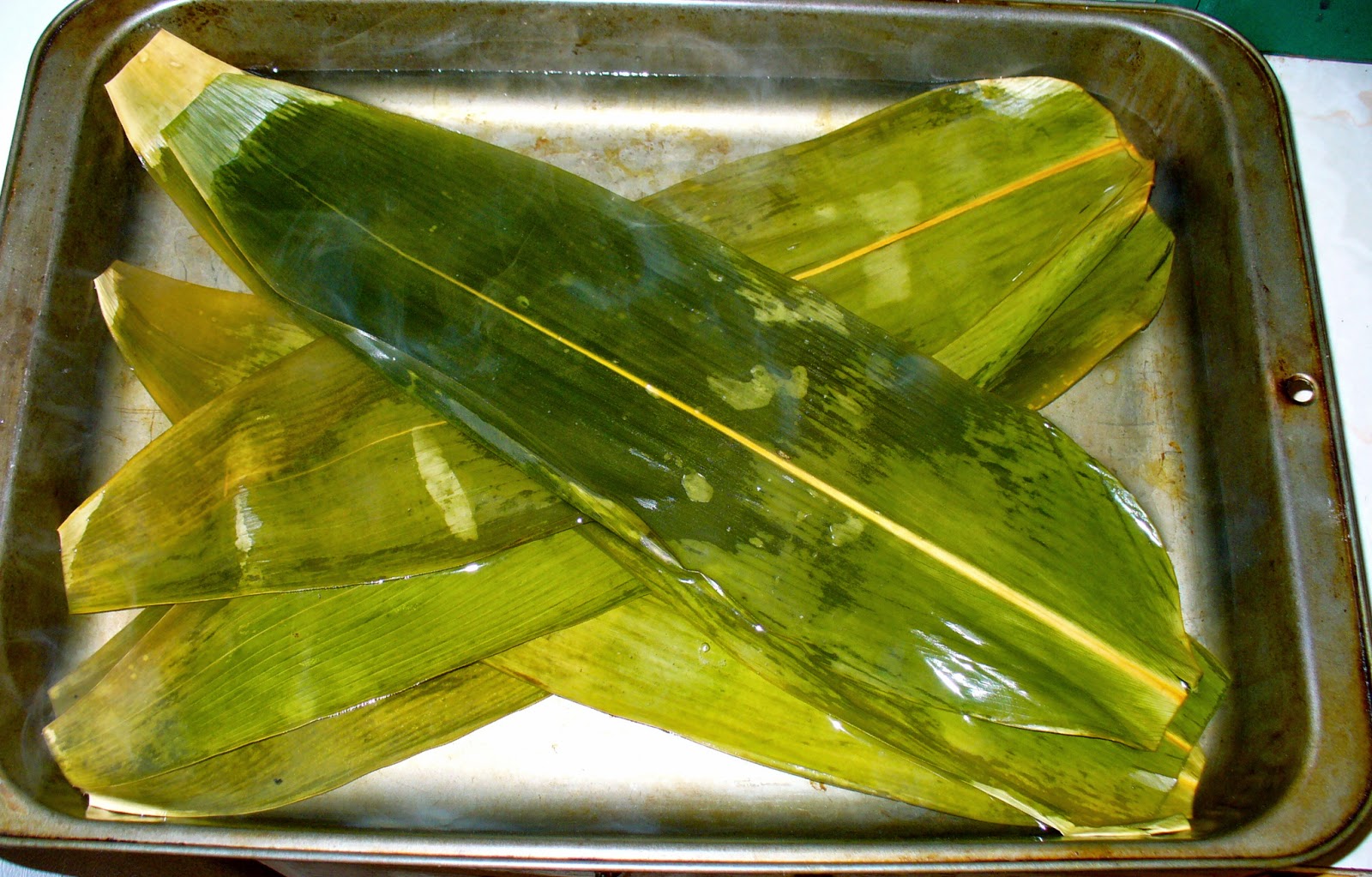
1. Put bamboo leaves in a large flat pan and cover with boiling water. Simmer for 30 minutes, then turn off the heat and soak another 30 minutes. 

2. Meanwhile, rinse the sticky rice and soak in cold water for 1 hour. After 1 hour, rinse the rice again and drain. 

3. Drain the bamboo leaves. Twist one leaf into a cone, with a little tuck in the back.


4. Hold the cone in one hand and scoop in 2 spoonfuls of rice. 


5. Make an indentation for a spoonful of red bean paste. Cover with more rice. 


6. Fold the top of the leaves over, squeeze gently into a triangular packet, and tie tightly together with a piece of string (this is tricky and takes some practice, but the dumplings hold together amazingy well no matter how badly you tie them.)

7. Repeat for the other dumplings. Boil in a pot of water for 25 minutes.


8. Cut the strings, open, and serve.


5. Throw zongzi in the water:
Another tradition (that seems to tie things together in my mind) is to throw zongzi into the river, as an offering to the Dragon King, the divine ruler of the ocean. The Dragon King lives in an underwater crystal palace, and can manipulate the weather and bring rainfall.


I will take one zongzi to the creek to offer the Dragon King (and probably the ducks as well).