Showing posts with label eggs. Show all posts

April 20, 2025

Easter

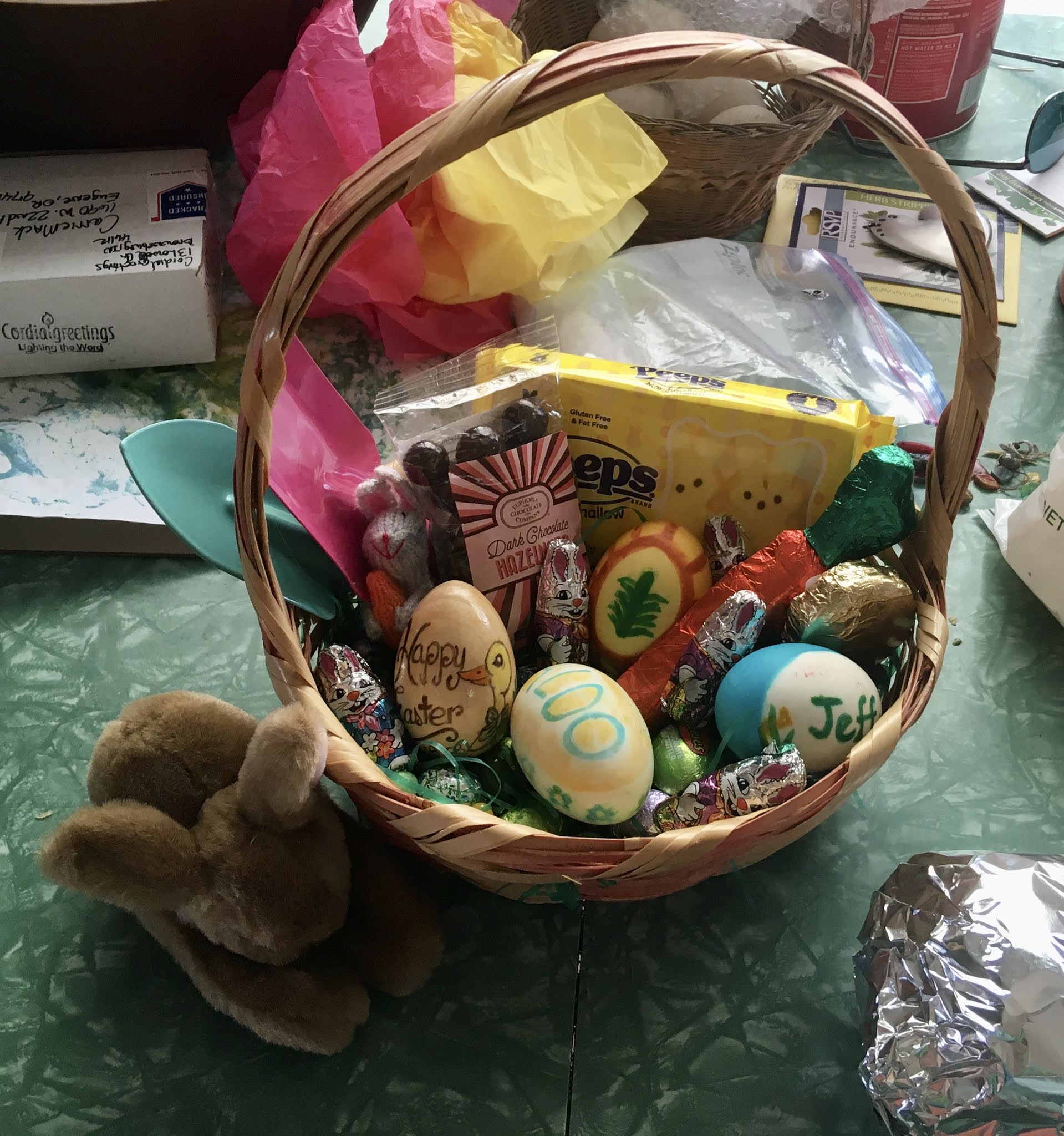
2021 egg hunt

Easter is the most important and joyful of all Christian holy days because it marks the resurrection of Jesus. Easter always comes after the spring equinox, when lots of things in nature are returning to life; specifically Easter falls on the first Sunday after the full Moon on or just after the equinox.

The English word Easter comes from the Old English Eastre, which was the name for the spring season.

Easter is the penultimate time of hope, renewal and new life, which is at the heart of the message that Christians wish to proclaim and live in the world. I see this as a reminder to live each day as a new day, and to have faith that the actions I take will have transforming power in the world.

Agenda today:
1. Read "Everyday Simplicity"
2. Greet the Easter sunrise with joy
3. Egg hunt

April 14, 2025

Easter Week

This whole week is called Easter week or Holy Week,
and I enjoy celebrating it with my family. My grandsons are too young to understand the story of death and rebirth, and so we focus on the spring theme of new life. 

Agenda:
1. Love meditation
2. Read "The 5 Resets"
3. Pocket calendar plan

March 20, 2025

Spring Equinox and Nowruz

Spring equinox 
occurred this morning at 2:01 a.m. PDT. The word equinox comes from the Latin words aequus (equal) and nox (night). This is a moment of balance - the sun rises exactly in the east and sets exactly in the west, and we experience twelve hours each of light and dark. From this moment on, we gain more light each day, until the summer solstice.

And Nowruz is the Persian New Year, which begins each year at the time of the spring equinox in Iran, and is celebrated for two weeks. The word Nowruz means New Day in Persian. It’s an ancient Persian belief that creation of the world took place on the first day of spring.

Agenda Today:
1. Journal queries
 2. Spring cleaning and decorating
3. Dye a few eggs
5. Make Koloocheh Cookies
6. Set up a haft sin
7. Nowruz Ceremony

March 31, 2024

Easter

Easter is the most important and joyful of all Christian holy days because it marks the resurrection of Jesus. Easter always comes after the spring equinox, when lots of things in nature are returning to life; specifically Easter falls on the first Sunday after the full Moon on or just after the equinox.

The English word Easter comes from the Old English Eastre, which was the name for the spring season.

Easter is the penultimate time of hope, renewal and new life, which is at the heart of the message that Christians wish to proclaim and live in the world. I see this as a reminder to live each day as a new day, and to have faith that the actions I take will have transforming power in the world.

Agenda today:
1. Greet the Easter sunrise with joy
2. Egg hunt

April 17, 2022

Easter

Easter is the most important and joyful of all Christian holy days because it marks the resurrection of Jesus. Easter always comes after the spring equinox, when lots of things in nature are returning to life; specifically Easter falls on the first Sunday after the full Moon on or just after the equinox. 


The English word 
Easter comes from the Old English Eastre, which was the name for the spring season.


Easter is the penultimate time of hope, renewal and new life, which is at the heart of the message that Christians wish to proclaim and live in the world. I see this as a reminder to live each day as a new day, and to have faith that the actions I take will have transforming power in the world.

Agenda today:
1. Greet the Easter sunrise with joy
2. Egg hunt

April 16, 2022

Great Eggy Saturday and Full Hare Moon

Today is Great Saturday or Holy Saturday,
the day between Jesus' death and his resurrection. In the Church, it's celebrated with watchful expectation and funeral hymns.

This is the day that our family usually dyes eggs, but because we have a big party today we dyed early. 

Eggs universally symbolize birth and potential. For Christians, at Easter, eggs stand for hope and spiritual rebirth.

And tonight is the full moon; this one is called amanta kotantal or "Time for pounding camus" by the Kalapuya of my area, and the Hare Moon by others, because it's the month when rabbits leap and play and mate.
Carmella and Toffee
We are now at the peak of the strong-energy yang phase of the waxing moon, and will soon begin the shift to the quiet-energy yin time of the waning moon. 

Agenda Today: 
1. Take a vision walk
2. Celebrate balance
3. Gratitude practice
4. Eggs

April 4, 2021

Easter

Easter is the most important and joyful of all Christian holy days because it marks the resurrection of Jesus. Easter always comes after the spring equinox, when lots of things in nature are returning to life; specifically Easter falls on the first Sunday after the full Moon on or just after the equinox. 

The English word 
Easter comes from the Old English Eastre, which was the name for the spring season.


Easter is the penultimate time of hope, renewal and new life, which is at the heart of the message that Christians wish to proclaim and live in the world. I see this as a reminder to live each day as a new day, and to have faith that the actions I take will have transforming power in the world.

Agenda today:
1. Greet the Easter sunrise with joy
2. Egg hunt

April 3, 2021

Great Eggy Saturday


Today is Great Saturday or Holy Saturday, the day between Jesus' death and his resurrection. In the Church, it's celebrated with watchful expectation and funeral hymns. This is the day that our family usually dyes eggs. Eggs universally symbolize birth and potential. For Christians at Easter eggs stand for hope and spiritual rebirth.

Agenda Today: 
1. Make natural egg dyes
2. Make cascaróne eggs
3. Dye pysanky eggs

March 28, 2021

2021 Lenten Calendar, Week Seven

My theme for Lent this year is the Land I Live On. Most of my activism focus is on climate change, and I want to fuel that work with a strong and intimate connection to this land. I want to better understand my relationship to the natural world and the cycles of the seasons, the history, culture, and ecosystem of my valley, the indigenous peoples and how I connect to them, and the responsibility I feel for the land.

Also, because I am caring for my grandson this year, I have a unique opportunity to see the natural world through a baby's eyes, with Wonder and Discovery. I want to re-connect to the awe for Creation that I felt as a child.
 
March 28, Palm Sunday-
1. Journal queries: On Palm Sunday Jesus confronted the Roman domination of Jerusalem. I too am called to speak truth to power and put my faith into action.
Where do I see domination systems today?
What are my intentions for facing them with peaceful actions?

Journal: I have thrown myself fully into the climate justice movement, and that has already required me to speak truth to power, as well as to friends and family. My intentions are to speak with humble and compassionate honesty, from my own experience.

2. Prepare for a clearness meeting: I've been asked to clerk a meeting for clearness on reparations to Native Americans for a Friend. Today I will read the essay and ground myself in our process for clearness.

March 29, Holi-
3. Study Braiding Sweetgrass, section 4: The significance of braiding plaits of sweetgrass into three strands is symbolic of the philosophy and spirituality of the indigenous people. Sweetgrass is a sacred, healing plant to the Potawatomi people and is braided “... as if it were our mother’s hair, to show our loving care for her.”

4. Celebrate equality with color play:
 Holi is a Hindu holiday that marks the end of winter in India. It's sometimes called the Festival of Color, because on Holi everyone in India throws paint at each other! 

My grandson and I will mark the day with some outdoor paint play. 

March 30-
5. Study Braiding Sweetgrass, section 4: Preserving the relationship between plants and people through ecological restoration is another example of the need for listening to the plants. Kimmerer states in the ‘Umbilicaria: The Belly Button of the World’ chapter, “... lichens are born from reciprocity. ... They remind us of the enduring power that rises from mutualism, from the sharing of the gifts carried by each species.”

March 31-
6. Go to a climate rally: During the national Build Back Fossil Free Week of Action (March 29th – April 3rd), we will have local opportunities to take action. Today I went to a rally at the old Federal Building (my first for over a year!)

April 1, Maundy Thursday-
7. Show Love: Maundy is an English word that comes from the Latin mandatum, referring to the new commandment that Jesus made on that night: 
“A new commandment I give to you, that you Love one another. As I have loved you so you must love one another.” (John 13:34). 
8. Go to the garden tonight to pray: The Catholic Church has a tradition of keeping a vigil after the Maundy Thursday service, in remembrance of Jesus' important prayer in the garden of Gethsemane on this night. His instructions to his apostles were to "watch and pray", so I will sit in silence and wait for the Spirit to fill me. I will pray for peace in the world, respect for the earth, health for the sick, and comfort for the grieving. 

April 2, Good Friday-
9. Darkness to Hope Meditation: This morning I reflect on desperation and despair. I remember again that the soul's "dark night" is a part of the human condition. My capacity to experience despair is a gift; through it I am transformed. Jesus said, "You must be born again." (John 3:7). The ability to shift from despair to hope is how I get the strength to live life whatever the daily deaths I might face.

April 3, Great Saturday-
10. Dye eggs with my family


April 4, Easter- 

March 21, 2021

Nowruz and First Quarter Moon

Nowruz is the Persian New Year, which begins each year at the time of the spring equinox in Iran, and is celebrated for two weeks. The word Nowruz means New Day in Persian. It’s an ancient Persian belief that creation of the world took place on the first day of spring.

This is also the First Quarter Moon; we are one-quarter of the way through the moon cycle. The moon is waxing - getting larger - until it's full again. Now is the time to show full effort for priorities.

  • First quarter (half moon) - Full effort, obstacles, flexibility

Agenda Today:
1. Journal queries
2. Make a full effort plan
3. Prepare the sabzeh
4. Dye a few eggs
5. Make Koloocheh Cookies
6. Set up a haft sin
7. Nowruz Ceremony

March 21, 2020

Nowruz

Nowruz is the Persian New Year, which begins each year at the time of the spring equinox in Iran, and is celebrated for two weeks. The word Nowruz means New Day in Persian. It’s an ancient Persian belief that creation of the world took place on the first day of spring.

Agenda Today:
1. Prepare the sabzeh
2. Dye a few eggs
3. Make Koloocheh Cookies
4. Set up a haft sin
5. Nowruz Ceremony

April 21, 2019

Easter

Easter is the most important and joyful of all Christian holy days because it marks the resurrection of Jesus. Easter always comes after the spring equinox, when lots of things in nature are returning to life- specifically, on the first Sunday after the full Moon on or just after the equinox. 

The English word Easter comes from the Old English Eastre, which was the name for the spring season.


Easter is the penultimate time of hope, renewal and new life, which is at the heart of the message that Christians wish to proclaim and live in the world. I see this as a reminder to live each day as a new day, and to have faith that the actions I take will have transforming power in the world.

Agenda today:
1. Greet the Easter sunrise with joy
2. Put on new clothes to symbolize new life
3. Hunt for Easter eggs

April 20, 2019

Great Saturday


Today is Great Saturday or Holy Saturday, the day between Jesus' death and his resurrection. In the Church, it's celebrated with watchful expectation and funeral hymns. This is the day that our family usually dyes eggs. Eggs universally symbolize birth and potential. For Christians at Easter eggs stand for hope and spiritual rebirth.

Agenda Today: 
1. Make natural egg dyes
2. Make cascaróne eggs
3. Dye pysanky eggs

March 21, 2019

Nowruz


Nowruz is the Persian New Year, which begins each year at the time of the spring equinox in Iran, and is celebrated for two weeks. The word Nowruz means New Day in Persian. It’s an ancient Persian belief that creation of the world took place on the first day of spring.

Agenda Today:
1. Prepare the sabzeh
2. Dye a few eggs
3. Make Koloocheh Cookies
4. Set up a haft sin
5. Nowruz Ceremony

March 31, 2018

Great Saturday and Full Blue Moon

This morning was the full moon, called the Blue Moon because it was the second full moon in March (also the second blue moon this year, so far!). 

Actually, the original definition of a blue moon is a fourth full moon in one season; I'm going with the newer definition- the second full moon in a month- because I don't have any better name for this moon. Both are correct, because it's folklore, and folklore is fluid.

Today is also Great Saturday or Holy Saturday, the day between Jesus' death and his resurrection. In the Church, it's celebrated with watchful expectation and funeral hymns. This is the day that our family usually dyes eggs. Eggs universally symbolize birth and potential. For Christians at Easter, eggs stand for hope, and spiritual rebirth.


Agenda Today: 
1. Update my altar
2. Journal queries
3. Practice balance
4. Make natural egg dyes
5. Make cascaróne eggs
6. Dye pysanky eggs

March 20, 2018

Spring Equinox and Nowruz

Spring Equinox occurred this morning at 3:15 a.m. PDT. The word equinox comes from the Latin words aequus (equal) and nox (night). This is a moment of balance- the sun rises exactly in the east, and sets exactly in the west, and we experience twelve hours each of light and dark. From this moment on, we gain more light each day, until the summer solstice.

Nowruz is the Persian New Year, which begins each year at the Spring Equinox and is celebrated in Iran for two weeks. The word Nowruz means New Day in Persian. It’s an ancient Persian belief that creation of the world took place on the first day of spring.

Agenda Today:
1. Journal queries
2. Start spring cleaning
3. Plant my straw doll
4. Prepare the sabzeh
5. Dye a few eggs
6. Make Koloocheh Cookies
7. Set up a haft sin
8. Nowruz Ceremony

April 16, 2017

Easter

Easter is the most important and joyful of all Christian holy days because it marks the resurrection of Jesus. Easter always comes after the spring equinox, when lots of things in nature are returning to life. Specifically, Easter is celebrated on the first Sunday after the full Moon on or just after the equinox. The English word Easter comes from the Old English Eastre, which was the name for the spring season.


Easter is the penultimate time of hope, renewal and new life, which is at the heart of the message that Christians wish to proclaim and live in the world. I see this as a reminder to live each day as a new day, and to have faith that the actions I take will have transforming power in the world.

Agenda today:
1. Greet the Easter sunrise with joy
To the old pagan tribes of northern Europe, spring was the time of the triumphant sun, the sun reborn to light the dark valleys. It has been a tradition since the Middle Age for folks to gather on hilltops to watch the sunrise on Easter morning. According to legend, the rising sun dances on Easter morning to honor Jesus’ resurrection. 

I have very deep memories of the walk up Coxcomb Hill on Easter morning to see the sunrise, followed by breakfast at our house for anyone from our church who cared to come, and a big egg hunt for us kids.

2. Put on new clothes to symbolize new life

3. Hunt for Easter eggs


April 15, 2017

Great Saturday

Today is also called Holy Saturday, the day between Jesus' death and resurrection. In the Church, it's celebrated with watchful expectation and funeral hymns.

This is the day that our family usually dyes eggs.
Eggs are part of the spring celebrations of people all over the world. It is a fact of science that bird eggs are laid only after the eye of the female bird is stimulated by more than twelve hours of light per day, which doesn’t happen until springtime approaches. The people of long ago noticed the connection between eggs and warmer days, and so the egg became a symbol of spring. Folks began to color and pattern eggs, and trade them during their spring festivals. They may have thought that eggs were a charm that helped the sun to grow warmer.

Eggs universally symbolize birth and potential. For Christians at Easter, eggs stand for hope, and spiritual rebirth.

Agenda today:
1. Make natural egg dyes:
Tumeric = gold, onion skins = red-orange, red cabbage = moss green.
I have three favorite natural egg dyes, made with onion skins, red cabbage, and turmeric. 

Ingredients: 
  • 2 c. dried onion skins (collect from the bottom of store onion bins)
  • 1/2 red cabbage
  • 2 Tbsp. turmeric
  • 1 tsp. alum
  • 2 Tbsp. vinegar
  • raw eggs
1. Start three pots of water boiling, and add the onion skins to one, the red cabbage (chopped up a bit) to another and about 2 Tbsp. of turmeric to the third.

2. After the pots boil for an hour, add 1 tsp. alum to the cabbage, and 1 Tbsp. vinegar to the other two.

3. Now you can add eggs and simmer for 20 minutes.


2. Make cascaróne eggs: 
Mexican children make a large number of cascarónes at Carnival, Easter, and also at birthdays and weddings. These confetti-filled eggs are easy to make, and then you sneak up on someone, holding a cascaróne hidden in your hand, and smash it (gently) on your victim’s head like a miniature piñata!


To see how to make these visit my Dragonfly Studio web page.

3. Dye pysanky eggs: 
In Eastern Europe eggs are decorated with the wax resist method. Very complex designs are created with many layers of wax and dye. People give pysanky to friends at Easter as a good-luck token.

I try to make a new pysanky each year to hang on my egg tree. 


Supplies: eggs (check for cracks), vinegar, Ukrainian egg dyes, small candle, a large potato, a large bent spoon, beeswax, pencils, paper, old paint brush, a finishing nail, kitska (optional), paper towels, large candle, beads, string, scissors, big needles

My potato and spoon wax-melting system.
1- Warm eggs to room temperature and clean with diluted vinegar- dab dry without rubbing. Also mix up the Ukrainian egg dyes as directed.

2- Set up half a potato with a bent spoon (this an old-fashioned way to heat wax that I like!) 


Put a candle under the spoon and add some bits of dark beeswax- I use shavings from the end of a beeswax candle; beeswax sticks best to the egg, and dark beeswax is easiest to see as you apply it.


Using a brush
3-  Experiment with the waxing technique on an egg: Light the candle and melt the wax (You may need to adjust the height of the spoon to get the wax to melt). 

Use a brush or the head of a finishing nail (or a kitska) to apply wax to the egg.


Using a kitska.

The wax must be hot to stick, but if it starts to smoke, swivel the potato to move the spoon off the heat.


4- After you get the hang of it, look at traditional designs and symbols in a book or online. Here is one helpful site. Draw ideas on paper and plan the colors.

  • Designs are usually symmetrical. 
  • You can segment the egg with pencil (use rubber bands to draw straight circles). 
  • As you plan the colors, remember they will mix- so a yellow egg dyed blue may end up greenish, and a pink egg dyed blue may end up purple.

5- Begin by waxing all the white areas, and dye with the lightest color: Soak in a dye pot for 5-20 minutes.

Dry the egg on a paper towel, wax again, and dye again- until all the colors are applied.

6- Remove wax: Hold the egg at the side of a candle flame and wipe clean.


7- Blow the egg out. Tie a bead to end of string, thread through egg, and tie a loop to hang.