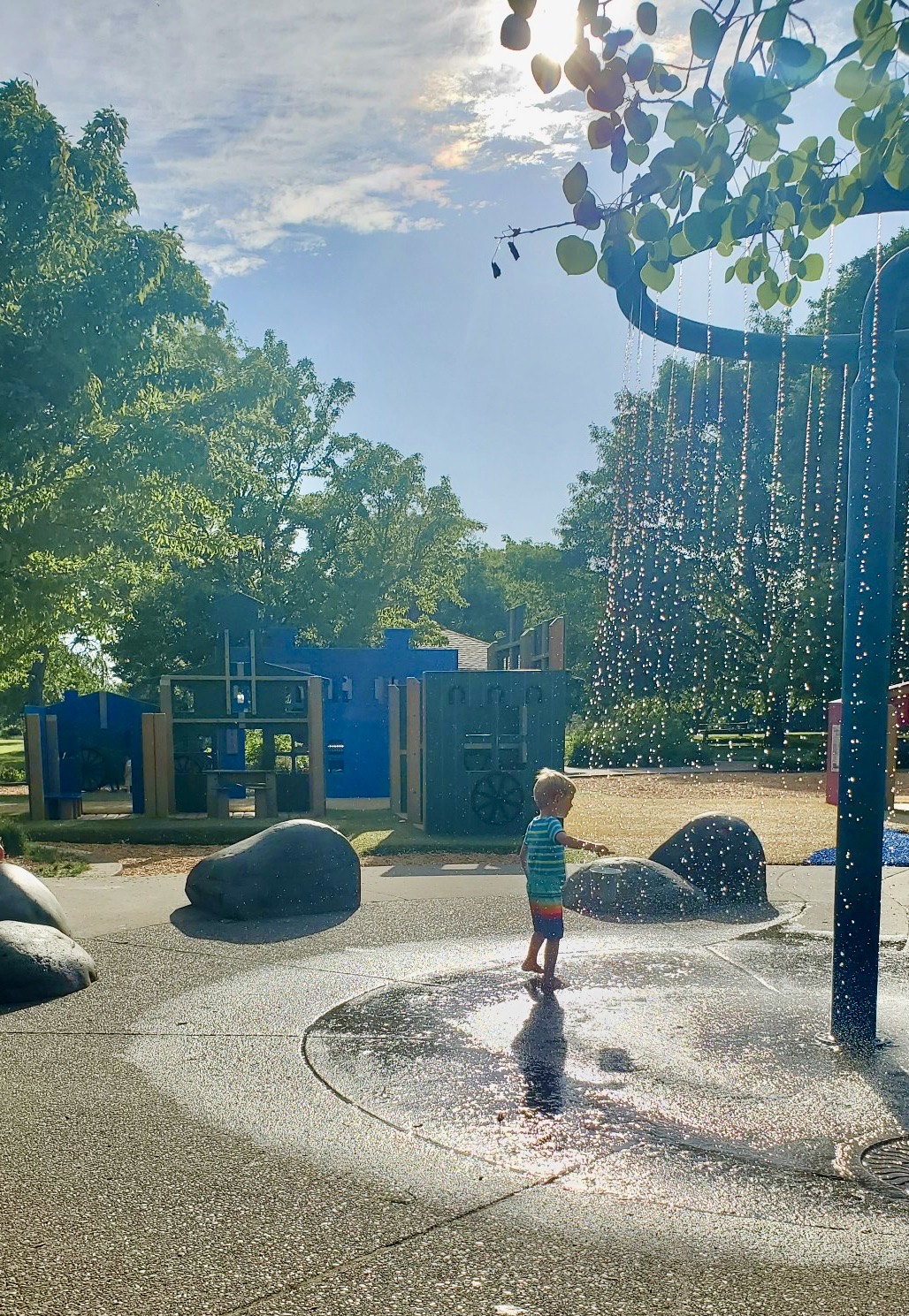
Showing posts with label summer. Show all posts

July 28, 2025

Return to Ease

As I've said, this summer has been "busy".
I am feeling stressed by the nagging sensation that I am behind on responsibilities, and also the feeling that I'm not taking time to enjoy summer days. 

Monday is my day to reset for the week and get my ducks in a row - make some plans for health and home, and prepare for Grandson fun and for a return to ease.

Agenda:
1.
 Read "The Sweet Spot"
2. Plan for summer ease
3. Big outdoor building projects

June 16, 2025

Prepare for the Solstice

The Solstice is less than a week away
, and my habit is to have a week of summer fun to welcome the start of this amazing season.

Summer is the wonderful time when we get to slow down, sleep in, play with friends, go swimming, bask in the sun, eat ice cream, stay up after dark... let’s face it; all the best stuff happens in the summer! No matter how old you are, summer is a time to slow your pace and savor the fun and freedom. The shift from spring to summer is worth noticing!


Agenda: 
1. Love meditation
2. Practice a Reverent Way of Being
3. Read "A Book That Takes It's Time"
4. Plan a fun build-up to summer
5. Make Sima
6. Care for the bedrooms

June 23, 2024

First Week of Summer

This is the first full week of summer,
when the days are long and time slows just a little. Even though we've been having summer-like days, it's full on us now! This transition is a big deal: I've found that if I celebrate the start of summer with enthusiasm, the rest of the summer becomes richer and more wonderful.

Agenda:
1. Read "Discover Inner Peace"
2. Plan a fun first week of summer
3. Harvest raspberries

June 20, 2024

Summer Solstice

The season is turning. Today the sun exerts its maximum energy on our part of the earth; the powers of outward expression are at their greatest, and the powers of inner contemplation are at their lowest.
And of course, just as we reach the point of maximum yang energy, yin energy is reborn and begins to gain strength: The next days will each be a little shorter again, until the winter solstice in December.


Agenda:
1. Make a New Solar Disk

2. Harvest herbs
3. Make Kanelbuller (Swedish Cinnamon buns)
4. Make flower crowns
5. Build a Solstice Fire

June 10, 2024

Dragon Boat Festival

The Dragon Boat Festival is an ancient Chinese celebration that always falls on the fifth day of the fifth lunar month of the Chinese calendar - that's five days after the new Dragon moon of May or June. It’s the third largest festival in the Chinese calendar, and it’s considered to be the start of summer. 

On this day everyone watches the spectacular dragon boat races, with the paddlers moving their oars in one fluid motion while the drummer thumps out a rhythm. The races might have begun as a symbolic way to encourage the dragons to fight in heaven and bring rain, so farmers would have good crops. Today, the races are held everywhere from Rome to Seattle, and if you are near enough to see them - how wonderful!

The Chinese call this the Duan Wu Jie (pronounced Dwan woo-oo Jee-eh) or Highest Meridian Festival. A meridian is a high point, as in the sun at the solstice. The Chinese celebrate the solstice today, according to a lunar calendar, so it varies every year. Traditionally this day is dangerous and unhealthy because it’s so strongly yang, putting the forces of ying and yang out of balance.

2018 xiangbao sachets
Agenda:
1. A Chinese chant
2. Make a xiangbao sachet
3. Make zongzi (dumplings)
4. Throw zongzi in the water

June 1, 2024

June Transition

June is a transition month - the end of spring and the beginning of summer. June’s element is fire, which purifies and gives life. It’s a highly yang time of movement and power, the season of completion, abundance and fulfillment. I have a hope that in summer I will reach the full flowering of my self and my dreams.

June has a different pace, less scheduled though more active. It’s a time for fine-tuning, and for decisive action. June is when I like to energetically climb to the top of a hill, survey the landscape and climb down again, to put myself in context, evaluate my progress, see what I’ve accomplished since January, and make careful adjustments in my goals and priorities. 

My aim this month is to stand still and calm in the center while I am playing, cleaning, writing, socializing, teaching, digging in the garden, swimming, traveling, and painting. 

"Only when there is stillness in movement can the spiritual rhythm appear which pervades heaven and earth." -- Taoist text

Agenda:
1. Journal query
2. Read "It's a Meaningful Life"
3. Vow practice
4. Ray of Sun Meditation

June 30, 2023

Summer Camp at Home

Our home is a summer camp for our grandkids, with raspberry picking and a wading pool, and lazy days of play. In the mornings we putter in the garden, collect the harvest, and play in the sand pit. On cooler summer days we venture out into the neighborhood for bike rides and park play, or if it's too hot, we lounge indoors with the heat pump on.

On days without grandkids, we get summer projects done, and enjoy our peace. Our home is our sanctuary, and in the lazy days of summer we get to truly enjoy it.

Agenda:
1. Read "Happier at Home"
2. New sand pit
3. 
Sky mural
4. Harvest raspberries

June 29, 2023

Maidyoshahem

The Zoroastrian community honors the six seasons of the year by celebrating six Gahambars; the word gahambar means "proper season". Each of these six festivals is celebrated for five days, and each honors one of the six material creations: The heaven, water, earth, flora, fauna and man.
Maidyoshahem (may-eed-YO-sha-hem) is the second Gahambar, the Midsummer Rain feast, and it takes place each year from June 29 to July 3. This Gahambar celebrates the creation of water on our earth, and the last day is called Tirgan (pronounced Teer-gone), in honor of Tir, the angel of rain. Iranians celebrate Tirgan with dancing, singing, and by swimming and splashing water on each other.

Agenda this week:
1. Recite a Prayer
2. Make a Persian Salad
3. Get wet!

June 1, 2023

June Transition

June is a transition month
 - the end of spring and the beginning of summer. June’s element is fire, which purifies and gives life. It’s a highly yang time of movement and power, the season of completion, abundance and fulfillment. I have a hope that in summer I will reach the full flowering of my self and my dreams. 

June has a different pace, less scheduled though more active. It’s a time for fine-tuning, and for decisive action. June is when I like to energetically climb to the top of a hill, survey the landscape and climb down again, to put myself in context, evaluate my progress, see what I’ve accomplished since January, and make careful adjustments in my goals and priorities. 

My aim this month is to stand still and calm in the center while I am playing, cleaning, writing, socializing, teaching, digging in the garden, swimming, traveling, and painting. 

"Only when there is stillness in movement can the spiritual rhythm appear which pervades heaven and earth." -- Taoist text

Agenda:
1. Journal queries
2. Word #8 - Submission
3. Ray of Sun Meditation

June 29, 2022

Maidyoshahem

The Zoroastrian community honors the six seasons of the year by celebrating six Gahambars; the word gahambar means "proper season". Each of these six festivals is celebrated for five days, and each honors one of the six material creations: The heaven, water, earth, flora, fauna and man.
Maidyoshahem (may-eed-YO-sha-hem) is the second Gahambar, the Midsummer Rain feast, and it takes place each year from June 29 to July 3. This Gahambar celebrates the creation of water on our earth, and the last day is called Tirgan (pronounced Teer-gone), in honor of Tir, the angel of rain. Iranians celebrate Tirgan with dancing, singing, and by swimming and splashing water on each other.

Agenda this week:
1. Recite a Prayer
2. Make a Persian Salad
3. Get wet!

June 21, 2022

Summer Solstice

The season is turning. Today the sun exerts its maximum energy on our part of the earth; the powers of outward expression are at their greatest, and the powers of inner contemplation are at their lowest.
And of course, just as we reach the point of maximum yang energy, yin energy is reborn and begins to gain strength: The next days will each be a little shorter again, until the winter solstice in December.

Agenda:
1. Plan a fun first week of summer
2. Make a New Solar Disk

3. Harvest herbs
4. Make Kanelbuller (Swedish Cinnamon buns)
5. Make flower crowns
6. Build a Solstice Fire

June 7, 2022

June First Quarter Moon

At the First Quarter Moon
 we are one-quarter of the way through the moon cycle. The moon is waxing - growing in light and energy, creating a time for decisive action. 

I use this June quarter moon's energy to help me find a balance of simplicity and abundance - I am embracing the paradox of the expansive, free, effortless fullness, and rich, complex, and vital plainness that is summer. 

Agenda:
1. Journal queries
2. Read "Repacking Your Bags"
3. Make a full effort plan
4. Write a mission haiku
5. Practice visualization

June 4, 2022

June Abundance

June is a transition month - the end of spring and the beginning of summer. June’s element is fire, which purifies and gives life. It’s a highly yang time of movement and power, the season of completion, abundance and fulfillment. I have hope in summer that I will reach the full flowering of my self and my dreams. 

June has a different pace, less scheduled though more active. It’s a time for fine-tuning, and for decisive action. June is when I like to energetically climb to the top of a hill, survey the landscape and climb down again, to put myself in context, evaluate my progress, see what I’ve accomplished since January, and make careful adjustments in my goals and priorities. 

My aim this month is to stand still and calm in the center while I am playing, cleaning, writing, socializing, teaching, digging in the garden, swimming, traveling, and painting.

"Only when there is stillness in movement can the spiritual rhythm appear which pervades heaven and earth." -- Taoist text

Agenda:
1. Journal queries
2. Read "Repacking Your Bags"
3. Ray of Sun Meditation

June 29, 2021

Maidyoshahem

The Zoroastrian community honors the six seasons of the year by celebrating six Gahambars; the word gahambar means "proper season". Each of these six festivals is celebrated for five days, and each honors one of the six material creations: The heaven, water, earth, flora, fauna and man.

Maidyoshahem (may-eed-YO-sha-hem) is the second Gahambar, the Midsummer Rain feast, and it takes place each year from June 29 to July 3. This Gahambar celebrates the creation of water on our earth, and the last day is called Tirgan (pronounced Teer-gone), in honor of Tir, the angel of rain. Iranians celebrate Tirgan with dancing, singing, and by swimming and splashing water on each other.

Agenda this week:
1. Recite a Prayer
2. Make a Persian Salad
3. Get wet!

June 29, 2020

Maidyoshahem


The Zoroastrian community honors the six seasons of the year by celebrating six Gahambars; the word gahambar means "proper season". Each of these six festivals is celebrated for five days, and each honors one of the six material creations: The heaven, water, earth, flora, fauna and man.

Maidyoshahem (may-eed-YO-sha-hem) is the second Gahambar, the Midsummer Rain feast, and it takes place each year from June 29 to July 3. This Gahambar celebrates the creation of water on our earth, and the last day is called Tirgan (pronounced Teer-gone), in honor of Tir, the angel of rain. Iranians celebrate Tirgan with dancing, singing, and by swimming and splashing water on each other.

Agenda this week:
1. Recite a Prayer
2. Make a Persian Salad
3. Get wet!

June 29, 2018

Maidyoshahem

The Zoroastrian community honors the six seasons of the year by celebrating six Gahambars- the word gahambar means "proper season". Each of these six festivals is celebrated for five days, and each honors one of the six material creations: The heaven, water, earth, flora, fauna and man.
Maidyoshahem (may-eed-YO-sha-hem) is the second Gahambar, the Midsummer Rain feast, and it takes place each year from June 29 to July 3. This Gahambar celebrates the creation of water on our earth, and the last day is called Tirgan (pronounced Teer-gone), in honor of Tir, the angel of rain.

Iranians celebrate Tirgan with dancing, singing, and by swimming and splashing water on each other.

Agenda this week:
1. Recite a Prayer
2. Make a Persian Salad
3. Get wet!

June 27, 2018

Full Strawberry Moon

Tonight is the full moon called the Strawberry Moon. Sweet, ripe strawberries are a gift from Mother Earth that remind me of the springtime renewal of life, and the creative power I have to make my dreams real and visible. 
This is is a highly yang time of movement and strength, the season of completion, abundance and fulfillment. I have hope that I will reach my full flowering, begin to enjoy the fruits of my visions, and relax in the richness of success.
Agenda for today:
1. Update my altar
2. Journal queries
3. Depth practises
4. Take action

June 29, 2017

Maidyoshahem

The Zoroastrian community honors the six seasons of the year by celebrating six Gahambars- the word gahambar means "proper season". Each of these six festivals is celebrated for five days, and each honors one of the six material creations: The heaven, water, earth, flora, fauna and man.
Maidyoshahem (may-eed-YO-sha-hem) is the second Gahambar, the Midsummer Rain feast, and it takes place each year from June 29 to July 3. This Gahambar celebrates the creation of water on our earth, and the last day is called Tirgan (pronounced Teer-gone), in honor of Tir, the angel of rain.

Iranians celebrate Tirgan with dancing, singing, and by swimming and splashing water on each other. We celebrated with a trip to the coast!

Agenda this week:
1. Recite a Prayer
2. Make Persian Potato Salad
3. Get wet!

August 1, 2016

Teltaine or Lammas

Teltaine, also called Lammas, or Lughnasad (loo-na-sa), is the Celtic cross-quarter day celebrated from sunset August 1 until sunset August 2. It’s a hot, lazy, delicious time of the year; the air is still, and the force of the sun is strong. 

The focus today is on harvest, sacrifice, and thanksgiving; it’s customary to share the products of the first grains- corn, bread and ale. In ancient tradition, the grains of the Earth are the body of the God, sacrificed at the harvest, ground to flour, baked into bread and then consumed to keep the circle of life turning.

This is a time to give thanks and honor to powerful gods and goddesses of the grain harvest- Adonis, Tamuz, Demeter, Ceres, Freyja, Odin, and Lugh (pronounced Loo). They are in their prime now, sometimes generous, sometimes difficult, but always aware that their time is waning and they will soon die. This is the sacrifice that we give thanks for today.

Agenda Today:
1. Altar:
Add dried corn, red and yellow flowers, grains, fruits, vegetables, herbs.

2. Make a corn husk doll:
Each year I make a new corn husk doll, from fresh husks, and put her on the altar to bring luck and plenty throughout the cold half of the year. In six months, at the cross-quarter day of Imbalc, I will burn this corn doll.


Supplies: Corn husks, towels, string, scissors, fabric, yarn

1. 
Pick out 8 nice pieces of husk, and dip them in a tub of warm water to make them pliable. Lay them out on a towel.

First tie- before the head is padded.

2. Notice that the husks naturally curve, like they did around the corn. Make two stacks of 4 pieces--

  • with the narrow ends together 
  • curving in the same direction
  • with the 2 biggest pieces on the bottom of each stack
3. Next, put the two stacks together at the narrow ends, with the two biggest pieces back-to-back on the inside, and tie tightly 2-inches from the top with a small piece of string.


4. Wrap the top part (above the string) with small pieces of husk to pad the head... 
2nd tie- after the husks are folded over 
the padded head.


...then fold the two sections of husks over it on each side. Make the face smooth and pretty, and tie again, at the neck.


5. Dip a few long, thin pieces of husk in water, then roll and tie them together to make the arms. Insert under neck.

6. Pad the chest with husks and tie at the waist with string, raffia, or yarn.


7. Set aside to dry, then make clothes with scraps of cloth.


3. Make bread:
Make bread: Biscuits, muffins, corn bread, a gingerbread man, or popcorn... Sometimes the first loaf is made into the shape of a man to represent the God.

June 29, 2016

Maidyoshahem

The Zoroastrian community honors the six seasons of the year by celebrating six Gahambars- the word gahambar means "proper season". Each of these six festivals is celebrated for five days, and each honors one of the six material creations: The heaven, water, earth, flora, fauna and man.

Maidyoshahem (may-eed-YO-sha-hem) is the second Gahambar, the Midsummer Rain feast, and it takes place each year from June 29 to July 3. This Gahambar celebrates the creation of water on our earth, and the last day is called Tirgan (pronounced Teer-gone), in honor of Tir, the angel of rain. This will be an important festival in years to come, since Tir is especially invoked to counter drought.

Iranians celebrate Tirgan with dancing, singing, and by swimming and splashing water on each other.

Agenda this week:
1. Recite a Prayer:
The first four days of Maidyoshahem are devoted to services, and reciting prayers. Zoroastrians turn towards a flame while praying, which symbolises the fire of creation and the spiritual flame within each of us. And so I will stand before a candle flame to recite the Ashem Vohu (invocation of Asha) from the Avesta (Zoroastrian Book of Common Prayer).

The Ashem Vohu is a prayer with universal appeal. The word Ashem has many meanings: Law, Order, Beauty, Truth, Righteousness, Purity, Freedom. This one word expresses Divine truth, purity of body and mind, and all the beauty of nature. It's a central idea in Zoroastrianism. 

This prayer is like a mantra, to be chanted slowly. To hear it recited, go to this link.

ashem vohû vahishtem astî
Truth is the best good.

ushtâ astî
It is happiness.

ushtâ ahmâi hyat ashâi vahishtâi ashem.
Happiness is to one whose truth (represents) best truth.


2. Make Persian Potato Salad:
On the fifth day of a Gahambar, all the community comes together for a potluck feast, with traditional Persian dishes: Papeta-ma-ghosh, Iranian soup, fried bread, kharu-ghosh, ambakalio, cucumber salad, and ajil - a mix of seven different dried fruit and nuts.

The feast is payed for by those who can afford it. Food is prepared together by volunteers, and served by volunteers. Each person either donates food or helps to serve. The feast is a community get-together, when grudges are forgiven and forgotten, and friendships are formed or renewed.

Zoroastrians believe that the smell of good food attracts the Spiritual Beings, and so during the Gahambars spiritual and physical beings are able to eat together.


Since we are having a heat spell, I decided to make this delicious Persian potato salad. 

Ingredients:
  • 12 small new potatoes
  • 1 red onion
  • 1 carrot, grated
  • 1 cup fresh or frozen peas
  • 1/2-cup pitted Kalamata olives
  • 1/3-cup flat-leaf parsley
  • 1/2 cup fresh basil
Dressing:
  • 1 c. plain yogurt
  • 1/2-c. mayonnaise
  • 1-tsp. powdered mustard
  • juice from 1 lime
1- Put the whole potatoes into a medium saucepan of salted water. Bring to a boil, reduce the heat, and simmer until just tender, about 15 minutes. Drain the potatoes and cool.
Persian potato salad and cucumber salad
2- Chop the peas and boil for 2 minutes, then drain and cool.

3- Meanwhile, chop the onion and the herbs, and grate the carrot. Slice the olives. Combine in a salad bowl and chill.


4- Whisk together the yogurt, mayonnaise, mustard, lime juice, a little salt and black pepper.

5- Peel and chop the potatoes, and combine with the dressing and other vegetables; mix well.


3. Get wet!