Showing posts with label good luck. Show all posts

February 4, 2024

Prepare for Chinese New Year

Chinese New Year is at the end of this week, on February 10th this year. I love having this second opportunity to mark the new year; this one is my "Happy and Lucky" celebration.

In China a whole month is spent in preparations - cleaning, cooking, and decorating the house. All of the things displayed at Chinese New Year are symbols of the ideal life - tokens and reminders of the good things we hope for: Luck, wealth, long life, and happiness.

Agenda this week:
1. Shopping
2. House cleaning
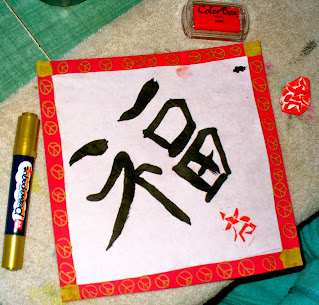
3. Nian-hua and good-luck calligraphy
4. Forced Blossoms
5. Make a Tray of Togetherness

January 14, 2023

Little New Year

Kitchen God I drew a few years ago.

Today is called Little New Year - it falls one week before Chinese New YearLittle New Year is also known as the Kitchen God Festival because this is the day that the Kitchen God, Tsao-wang, and his wife, Wang Bo-jia, leave to report to heaven. A picture of these two gods, printed or drawn on rice paper, hangs in a niche just above the stove in a Chinese home. 

This holiday always falls on the waning Third Quarter moon of January or February. Today's waning third quarter moon energy is yin - quiet, internal, heart-driven, intentional Being-ness. At this phase we can ease off a bit on actively pursuing goals, slow down, go within, and attend to inner work, renewal, and self-care.

Agenda today:
1. Renewal plan
2. Evaluation House
3. Monthly journal brainstorm
4. Kitchen God Good-bye Ceremony
5. Living room blessing

January 12, 2023

Prepare for Chinese New Year

Chinese New Year is in a week and a half, on January 22nd this year. I love having this second opportunity to mark the new year; this one is my "Happy and Lucky" celebration.

In China a whole month is spent in preparations - cleaning, cooking, and decorating the house. All of the things displayed at Chinese New Year are symbols of the ideal life - tokens and reminders of the good things we hope for: Luck, wealth, long life, and happiness.

Agenda this week:
1. Shopping
2. House cleaning
3. Nian-hua and good-luck calligraphy:
4. Forced Blossoms
5. Make Jiao-zi dumplings
6. Make a Tray of Togetherness

October 25, 2022

Diwali and New Kindly moon

Tonight is the night of the new moon. The Chinese call this tenth new moon the Kindly Moon. In China, this is the season for winter crop planting, and this month brings the first “little snow” which gently (and kindly) moistens the winter wheat seedlings. We don't have snow yet, but we've had some rain finally.


The new moon is the start of the lunar cycle, a time of high energy and clear thinking. Historically, the new moon is when women took time to be alone; it's a time to retreat, set intentions, and initiate something new.

This is also the start of the five day Hindu Festival of Diwali, which falls on the new moon of late October or early November. Diwali is the festival of good luck and prosperity- one of the most important festivals of the year for Hindus. On Diwali, people wear new clothes, clean and decorate their homes, go to fairs with music, dancing, fireworks, jugglers and snake charmers, and give gifts to each other.

1. Retreat Day
2. Choose a month theme
3. Set intentions
4. New moon altar and p
uja for prosperity
5. Start an Abundance Journal
6. Make almond katli

January 25, 2022

Little New Year and Third Quarter Moon

Kitchen God I drew a few years ago.
Today is called Little New Year - it falls on the day of the waning half moon in late January or early February - one week before Chinese New Year, on February 1st this year. I enjoy having this second opportunity to celebrate a new year, and think of this one as the "Happy and Lucky" celebration.

Little New Year is also known as the Kitchen God Festival because this is the day that the Kitchen God, Tsao-wang, and his wife, Wang Bo-jia, leave to report to heaven. In a Chinese home, a picture of these two gods, printed or drawn on rice paper, hangs in a niche just above the stove.

Today's waning moon energy is yin - quiet, internal, heart-driven, intentional Being-nessAt this phase we can ease off a bit on actively pursuing goals, slow down, go within, and attend to inner work and self-care.
 
Agenda today:
1. Renewal plan and self-care plan
2. Housework
3. Nian-hua and good-luck calligraphy
4. Forced Blossoms
5. Make Jiao-zi dumplings 
6. Kitchen God Good-bye Ceremony

November 4, 2021

Diwali and New Kindly Moon


Today is the start of the Hindu Festival of Diwali, which falls on the new moon of late October or early November, and lasts for five days. Diwali is the festival of good luck and prosperity- one of the most important festivals of the year for Hindus. On Diwali, people wear new clothes, clean and decorate their homes, go to fairs with music, dancing, fireworks, jugglers and snake charmers, and give gifts to each other.

And tonight is the night of the new moon. The Chinese call this tenth new moon the Kindly Moon. In China, this is the season for winter crop planting, and this month brings the first “little snow” which gently (and kindly) moistens the winter wheat seedlings. We don't have snow yet, but we've had some heavy rains. 

The new moon is the start of the lunar cycle, a time of high energy and clear thinking. Historically, the new moon is when women took time to be alone; it's a time to retreat, set intentions, and initiate something new.

1. Pick a theme
2. Start an Abundance Journal
3. Goals and intentions
4. New moon altar and meditation
5. Blessings Walk
6. Creativity practice
7. Make diya lamps
8. Puja for prosperity
9. Make almond katli

February 12, 2021

Chinese New Year and New Holiday Moon

The Chinese New Year starts when the new moon appears in China, so it's one day off from the new moon here, which rose yesterday. This is the month of the Holiday Moon.

The first day of the Chinese New Year is called Yüan-tan, the "Day of Origin". This one day determines the luck for the entire year, so Chinese people are careful to use their best manners and to remain honest and peaceful.

2021 is the year of the Metal Ox. People born this year are hardworking, active, always busy, and popular among friends.

Agenda for today:
1. Practice Receptivity
2. New altar
3. List my goals and s
et intentions for action
4. New moon meditation and prayer
5. Eat jai for breakfast
6. Give gifts
7. Make and give hóngbāo (money packets)

January 29, 2021

Prepare for the Chinese New Year

Chinese New Year is in two weeks, on February 12th this year. I enjoy having this second opportunity to celebrate a new year, and I think of this one as the "Happy and Lucky" celebration.

In China a whole month is spent in preparations- cleaning, cooking, and decorating the house. All of the things displayed at Chinese New Year are symbols of the ideal life- tokens and reminders of the good things we hope for: Luck, wealth, long life, and happiness.

Agenda this week:
1. Housework
2. Nian-hua and good-luck calligraphy
3. Forced Blossoms
4. Make Jiao-zi dumplings 

January 2, 2021

Kakizomi Day

Kakizome means "first writing". Today people all over Japan will take time to use a brush and sumi ink to write out a favorite quote or phrase- the first calligraphy of the new year. 

Kakizome is a way to express your positive wishes for the New Year. 

Agenda:
1. Practice my calligraphy
2. Make an omamori

November 14, 2020

Diwali and New Kindly Moon

Tonight is the night of the new moon. The Chinese call this tenth new moon the Kindly Moon. In China, this is the season for winter crop planting, and this month brings the first “little snow” which gently (and kindly) moistens the winter wheat seedlings. We don't have snow yet, but we've had some heavy rains.

This is also the start of the Hindu Festival of Diwali, which falls on the new moon of late October or early November, and lasts for five days. 

Diwali is the festival of good luck and prosperity- one of the most important festivals of the year for Hindus. On Diwali, people wear new clothes, clean and decorate their homes, go to fairs with music, dancing, fireworks, jugglers and snake charmers, and give gifts to each other.

Agenda Today:
1- Journal queries
2- Set intentions
3- Make diya lamps
4- New moon meditation and puja for prosperity
5- Make almond katli

May 27, 2020

Dragon Boat Festival

The Dragon Boat Festival is an ancient Chinese celebration that always falls on the fifth day of the fifth lunar month of the Chinese calendar- that's five days after the new moon of May or June. It’s the third largest festival in the Chinese calendar, and it’s considered to be the start of summer. 
On this day everyone watches the spectacular dragon boat races, with the paddlers moving their oars in one fluid motion while the drummer thumps out a rhythm. The races might have begun as a symbolic way to encourage the dragons to fight in heaven and bring rain, so farmers would have good crops. Today, the races are held everywhere from Rome to Seattle, and if you are near enough to see them- how wonderful!

The Chinese call this the Duan Wu Jie (pronounced Dwan woo-oo Jee-eh) or Highest Meridian Festival. A meridian is a high point, as in the sun at the solstice. The Chinese celebrate the solstice today, according to a lunar calendar, so it varies every year. Traditionally this day is dangerous and unhealthy because it’s so strongly yang, putting the forces of ying and yang out of balance.
2018 xiangbao sachets

Agenda Today:
1. A Chinese chant
2. Egg-balancing
3. Make a xiangbao sachet
4. Make zongzi (dumplings)

5. Throw zongzi in the water

January 23, 2019

Prepare for Chinese New Year

Chinese New Year is in two weeks, on February 5th this year- so it's time to prepare.
In China a whole month is spent in preparations- cleaning, cooking, and decorating the house. All of the things displayed at Chinese New Year are symbols of the ideal life- tokens and reminders of the good things we hope for: Luck, wealth, long life, and happiness.

Agenda this week:
1. Housework
2. Nian-hua and good-luck calligraphy
3. Forced Blossoms
4. Make Jiao-zi dumplings 

January 2, 2019

Kakizome Day


Kakizome means "first writing". Today people all over Japan will take time to use a brush and sumi ink to write out a favorite quote or phrase- the first calligraphy of the new year. 

Kakizome is a way to express your positive wishes for the New Year. 

Agenda:
Omamori from 2017
1. Practice my calligraphy
2. Make an omamori

June 18, 2018

Dragon Boat Festival

The Dragon Boat Festival is an ancient Chinese celebration that always falls on the fifth day of the fifth lunar month of the Chinese calendar- that's five days after the new moon of May or June. It’s the third largest festival in the Chinese calendar, and it’s considered to be the start of summer. 
On this day everyone watches the spectacular dragon boat races, with the paddlers moving their oars in one fluid motion while the drummer thumps out a rhythm. The races might have begun as a symbolic way to encourage the dragons to fight in heaven and bring rain, so farmers would have good crops. Today, the races are held everywhere from Rome to Seattle, and if you are near enough to see them- how wonderful!

The Chinese call this the Duan Wu Jie (pronounced Dwan woo-oo Jee-eh) or Highest Meridian Festival. A meridian is a high point, as in the sun at the solstice. The Chinese celebrate the solstice today, according to a lunar calendar, so it varies every year. Traditionally this day is dangerous and unhealthy because it’s so strongly yang, putting the forces of ying and yang out of balance.
2018 xiangbao sachets

Agenda Today:
1. A Chinese chant
2. Egg-balancing
3. Make a xiangbao sachet
4. Make zongzi (dumplings)

5. Throw zongzi in the water

March 12, 2018

Farvardegan, Red Wednesday Eve, and Hamaspathmaidyem


This is the start of Farvardegan, which means “days of remembering the Fravashis" or guardian angels. It's a ten day Zoroastrian festival, which includes the five days of Hamaspathmaidyem (beginning on March 17th this year), the sixth and last gahambar. This gahamber is the most significant to Zoroastrians, because it's devoted to remembering the fravashis or guardian angels. According to Zoroastrian religion, each of the 6 creations was created during one of the Gahambars. Mankind was created on this last one. 

Farvardegan is a prelude to Nowruz, the Persian New Year,  on March 21. The word Nowruz means New Day in Persian. It’s an ancient Persian belief that creation of the world took place on the first day of spring.


Agenda this week:
1. Spring cleaning
2. Light a lamp for the angels
3. Recite prayers
4. Make Ajeel
5. Build a fire and JUMP!

November 3, 2017

Full Frost Moon and Xia Yuan Jie

Tonight is the full moon called the Frost Moon, because now is when the first hoarfrost might appear-- that white frost that makes walking crunchy, and that requires scraping of windshields. Frost is a reminder that winter is coming, and we all need to finish our outdoor chores and close up the storm windows.


Today is also Xia Yuan Jie-- Lower Primordial Festival-- a Chinese festival that falls on the 15th day of the 10th lunar month. It’s the third of a trio of Taoist holidays, that honor three Taoist gods, called the Three Great Emperor Officials:
  • Tian-Guan, the Heaven Official, gives happiness, and rules over the first 6 months of the year (the yang part), beginning on the 15th day of the 1st lunar month, at the Lantern Festival.
  • Di-Guan, the Earth Official, forgives sins and guilt, and rules over the next 3 months (the yin part), beginning on the 15th day of the 8th lunar month, at the Ghost Festival.
  • Shui-Guan, the Water Official, rules over the last 3 months of the year (also yin).
Shui-Guan's full title is The Great Emperor Water Official of Pervasive Yin of Lower Primordial & Tertiary Grade Who Eliminates Distress. Today is considered to be his birthday, and is also the day when he visits the Mortal World to do inspections and release blessings.

Agenda for today:
1. Update my altar
2. Practice at my theme
3. Gratitude journal queries
4. Hold the world in the light

October 28, 2017

Chung Yeung

Top of Hendrick's park in October sunshine (2016).
Chung Yeung falls on the ninth day of the ninth lunar month in the Chinese calendar. The name means "double yang". According to the I Ching, nine is a yang number, and since today has nine for both day and month, it has too much yang, and is a potentially dangerous date.

Agenda Today:
1. Climb a mountain
2. Honor my ancestors
3. Drink chrysanthemum tea and appreciate chrysanthemums
4. Make gao (rice cake)

May 30, 2017

Dragon Boat Festival

The Dragon Boat Festival is an ancient Chinese celebration that always falls on the fifth day of the fifth lunar month of the Chinese calendar- that's five days after the new moon of May or June. It’s the third largest festival in the Chinese calendar, and it’s considered to be the start of summer. 
On this day everyone watches the spectacular dragon boat races, with the paddlers moving their oars in one fluid motion while the drummer thumps out a rhythm. The races might have begun as a symbolic way to encourage the dragons to fight in heaven and bring rain, so farmers would have good crops. Today, the races are held everywhere from Rome to Seattle, and if you are near enough to see them- how wonderful!

The Chinese call this the Duan Wu Jie (pronounced Dwan woo-oo Jee-eh) or Highest Meridian Festival. A meridian is a high point, as in the sun at the solstice. The Chinese celebrate the solstice today, according to a lunar calendar, so it varies every year. Traditionally this day is dangerous and unhealthy because it’s so strongly yang, putting the forces of ying and yang out of balance.

Agenda Today:
1. A Chinese chant:
The Chinese word for sun is tai-yang, which means “great yang”. Winter is a time of yin energy (shadows), and summer is a time of yang energy (sun).

Some Chinese people greet the sunrise with this chant:

Tai-yang, tai-yang! (tie-yawng)  = Sun or “great yang”
Chu yin, (chew in)                     = Go away shadows
xian yang. (shin yawng)            = Now is (the time for) sun

2. Egg-balancing:
It is said that if you can balance a raw egg on its end at exactly noon today, the rest of the year will be lucky.

3. Make a xiangbao:

The Chinese have many customs to protect against the excessive yang energy generated by the sun and moist heat at this time of year. My favorite is the xiangbao (pronounced shang-bow). 
Georgia made a snail.

Mothers tie these pretty sachets around the necks of children, to keep illness and bad spirits away. Xiangbao are usually silk, and they come in any imaginable shape and size, from a simple pouch, butterflies, hearts, animals- and they often have an embroidered design and a long red tassel. 

I made a butterfly xiangbao one year that I’m quite happy with, and my friend Georgia made a snail.


Supplies: Paper, pencil, scissors, silk scraps, fabric pencil, embroidery floss, needle, hoop, iron-on interfacing, potpourri, cord

1- Draw a pattern for the shape of your sachet. What could be a symbol of summer luck? a sun, butterfly, cat... It can be quite small: Mine is 3-inches across.

Also draw the embroidery design you want to decorate the shape with.


2- Iron a piece of silk. Cut out the paper pattern, and trace your shape and design onto the silk with a fabric pencil. Put silk into a hoop.


3- Decorate your sachet with embroidery stitches. (See pictures of Chinese embroidery to get an idea of the kinds of stitches to use.)


4- Cut well around the outside of your silk shape, and cut a piece of interfacing a little smaller (so it doesn't stick to your iron).


Iron the two together according to the interfacing directions.


5- Repeat for the back side. 


6- Cut the two shapes out. 


7- Whip stitch the two pieces together, leaving a small hole at the top.


8- Fill with potpourri. 


9- Insert the ends of a long loop of cord, and close the hole.


4. Make zongzi (dumplings):
Everyone eats at least one zongzi rice dumpling today to bring good luck. Originally zongzi (pronounced zong-za) might have been an offering to the dragons who brought the summer rain.

Zongzi are filled with many different things- I used sweet red bean paste.

Ingredients:
  • 1-1/2 c. sticky (glutinous) rice
  • 6 large bamboo leaves (sold in Asian food stores)
  • 1 c. sweet red bean paste
  • 6 pieces of string
Yield: Makes 6 dumplings-

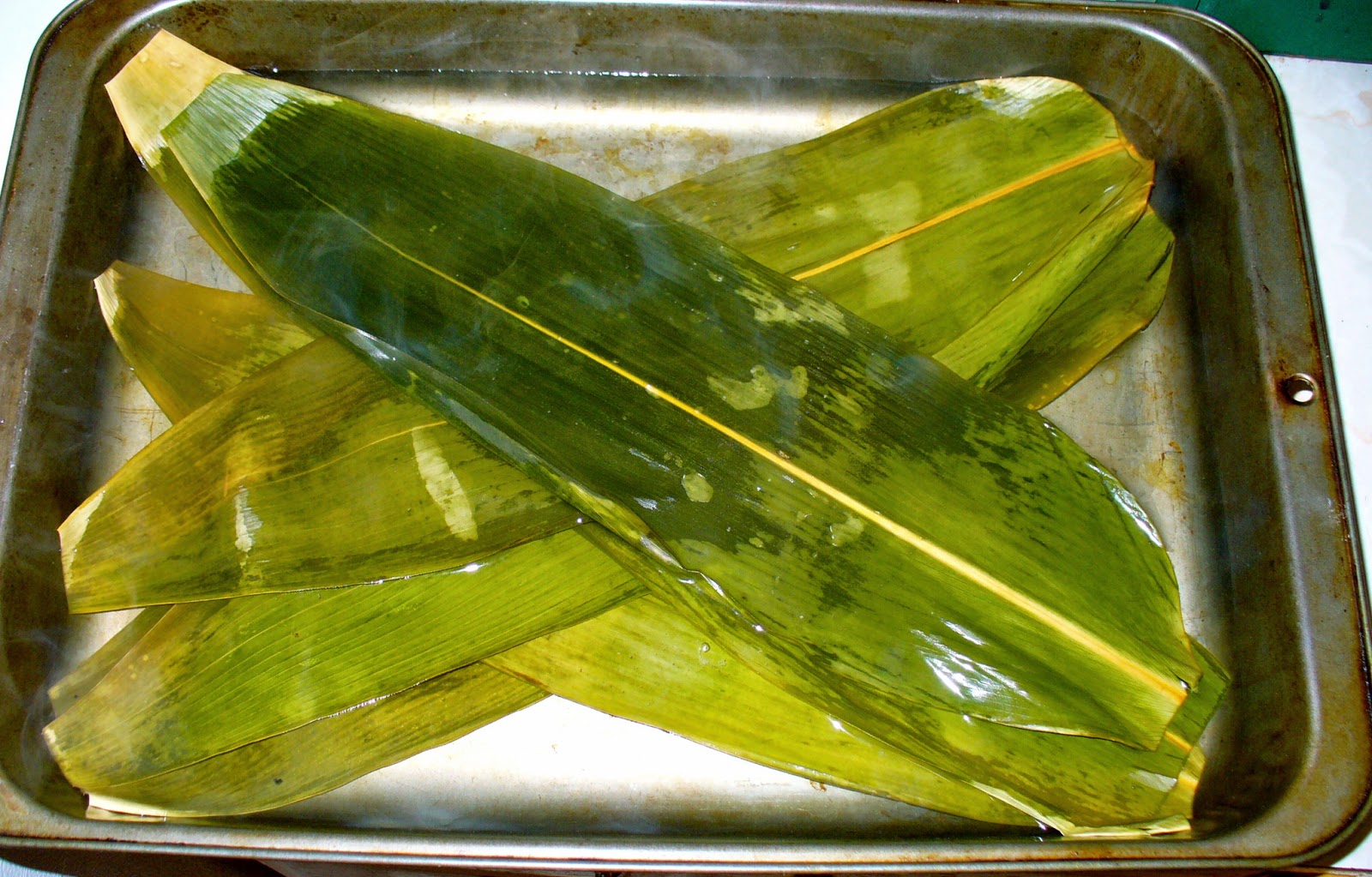
1. Put bamboo leaves in a large flat pan and cover with boiling water. Simmer for 30 minutes, then turn off the heat and soak another 30 minutes. 

2. Meanwhile, rinse the sticky rice and soak in cold water for 1 hour. After 1 hour, rinse the rice again and drain. 

3. Drain the bamboo leaves. Twist one leaf into a cone, with a little tuck in the back.


4. Hold the cone in one hand and scoop in 2 spoonfuls of rice. 


5. Make an indentation for a spoonful of red bean paste. Cover with more rice. 


6. Fold the top of the leaves over, squeeze gently into a triangular packet, and tie tightly together with a piece of string (this is tricky and takes some practice, but the dumplings hold together amazingy well no matter how badly you tie them.)

7. Repeat for the other dumplings. Boil in a pot of water for 25 minutes.


8. Cut the strings, open, and serve.


5. Throw zongzi in the water:
Another tradition (that seems to tie things together in my mind) is to throw zongzi into the river, as an offering to the Dragon King, the divine ruler of the ocean. The Dragon King lives in an underwater crystal palace, and can manipulate the weather and bring rainfall.


I will take one zongzi to the creek to offer the Dragon King (and probably the ducks as well).